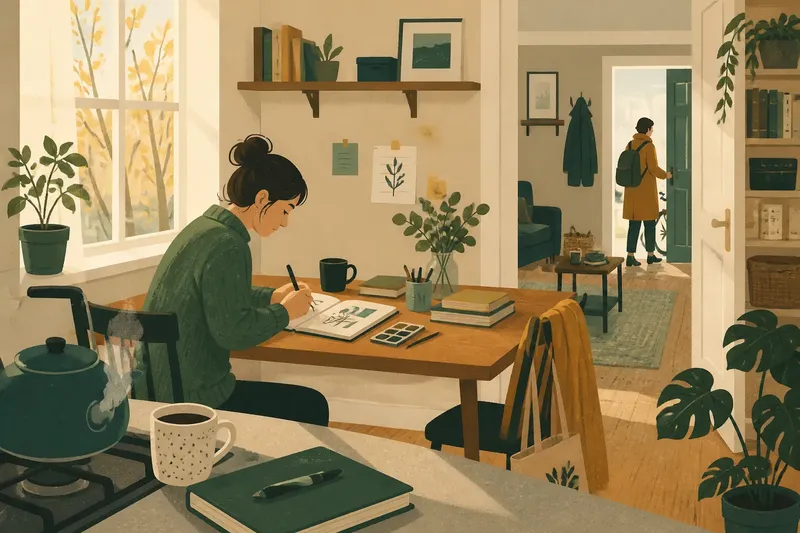
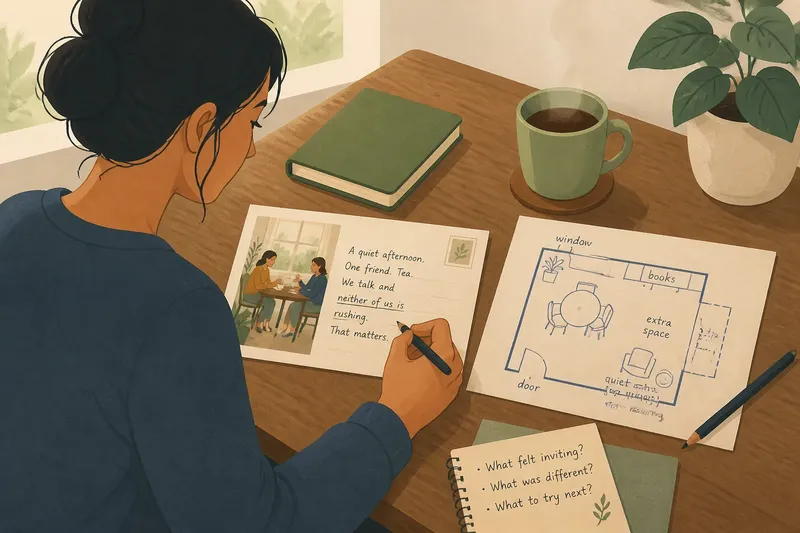
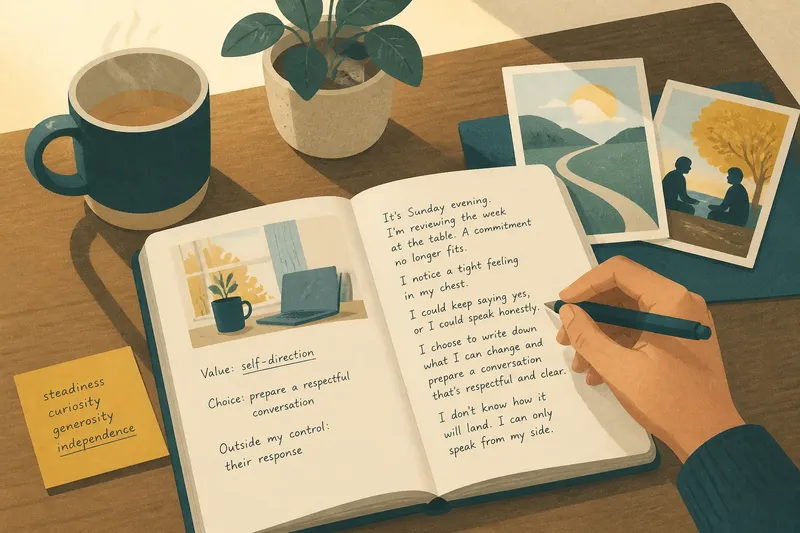
The Perfect-Future Trap: Why Every Picture Needs Ordinary Days
A realistic future vision includes chores, delays, and tradeoffs, helping you see whether the life you imagine fits your values and everyday needs.
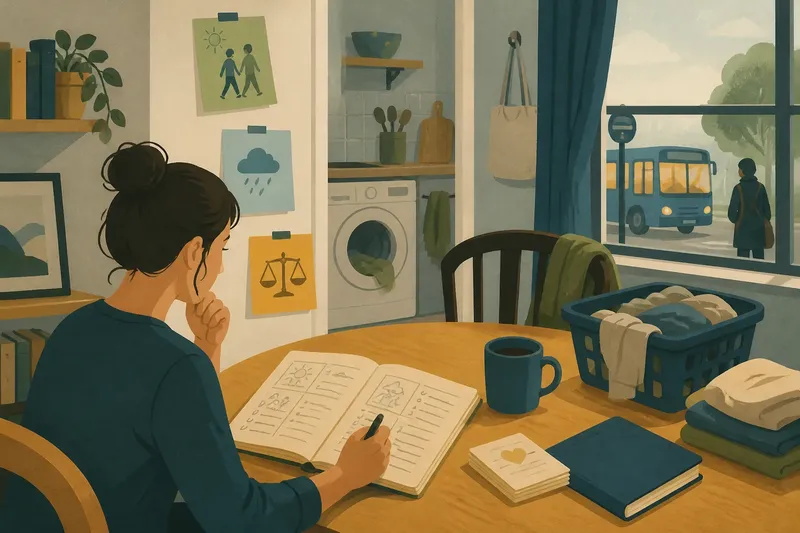
A future vision becomes more useful when it includes ordinary days. Laundry, a late bus, and a conversation you would rather postpone can reveal whether the life you imagine still suits you after its polished highlights fade.
This is not an argument against hope. It is a way to make hope more informative. A vision that includes routine, friction, and compromise can show which values a possible life supports—and which appear only in its most appealing moments.
What Perfection Hides
An idealized picture often focuses on outcomes: meaningful work, close relationships, a calm home, or time for creative projects. These may be genuine hopes. But outcomes alone do not show what it takes to sustain them or what else competes for your attention.
Suppose your future image includes a thriving garden but no watering, weeding, weather, or missed weekends. The garden might stand for care and patience, yet the image cannot tell you whether you want the recurring work as well as the harvest. Those missing details are unanswered questions, not flaws in your imagination.
Routine matters because values are lived through repeated choices. If you value connection, ask what ordinary contact might look like when everyone is tired. If you value independence, consider how much coordination or support your preferred life might still require. The answer need not be perfect; it needs to be visible enough to examine.
Build an Honest Picture
Instead of making one polished scene, describe a stretch of life with several kinds of days: a satisfying day, a plain day, and a difficult day. The contrast helps you judge whether the imagined life holds up under ordinary pressure.
For each day, note what is happening, what needs attention, and what you would have to set aside. “A project takes longer than expected, so I postpone a personal errand” reveals more than “work is busy.” “I make dinner with a friend, then need a quiet evening afterward” makes room for both connection and recovery.
Say you imagine living closer to family because being available matters to you. In this invented situation, your notes include a shared meal, a workday that runs late, and a visit moved because someone needs rest. You notice that the value is not constant availability; it is showing care without treating every change of plan as failure. That distinction gives you a more useful vision to consider.
A Week for Reality
Use these prompts as a small creative exercise, not a demand to plan your life in detail. Keep notes in a paper notebook, a notes app, or on index cards. If you prefer, complete the prompts in order without assigning one to each day.
- Name the hope. Write one sentence about a future quality you want, such as more room for focused work or closer ties with friends. Then ask what the hoped-for outcome would let you do or feel.
- Describe an ordinary day. Add concrete details about how that quality might appear amid meals, messages, errands, and rest. Include one task unrelated to your main hope, so you can see whether the vision belongs to a life or only to a highlight.
- Add friction. Introduce a plausible interruption, delay, or mismatch. Ask what you would want to protect and what could reasonably move.
- Name the compromise. Identify something the imagined life might require you to do less often, share, delegate, or accept imperfectly. Ask whether you could choose that tradeoff without quietly resenting it.
- Check the values. Underline actions in your notes that express what matters to you. Circle attractive outcomes with no clear connection to those actions. Decide whether each outcome still belongs or reflects someone else’s idea of success.
- Revise the scene. Rewrite the imagined stretch of life with one ordinary difficulty and one deliberate boundary, such as keeping an evening uncommitted or asking someone to share a task. Let the revision change the vision rather than merely decorate it.
- Choose a question. Write down the most important uncertainty the exercise revealed. It might concern how much solitude you need or whether a routine feels worthwhile. Treat it as a prompt for further reflection, not a verdict on your future.
The sequence moves from desire to conditions, then back to meaning. If a prompt feels too abstract, add a specific task, competing need, or change of plan. If your notes start to feel like a rigid timetable, return to the larger question of what the day asks of you.
Tradeoffs and Priorities
Compromise is not the same as surrender. A chosen tradeoff can clarify what you value, such as keeping a modest creative practice while accepting fewer open evenings. A forced compromise may feel different because it conflicts with something you need or rests on another person’s unexamined expectations.
When you spot a cost, ask whether it is part of the life you want or an assumption you have not checked. Ask whether you would accept it if the appealing outcome took longer to arrive, and what would help you notice if the arrangement stopped working. These questions keep a vision flexible without treating it as a promise that everything will somehow fit.
A realistic picture can hold more than one need. You might value creative work without wanting it to occupy every free hour. You might want closeness with family and also need privacy. Those needs do not automatically cancel each other; they point toward conditions worth exploring, such as how often you see people or how much unscheduled time you preserve.
How Does Realism Help?
Does difficulty make a vision pessimistic?
No. Including difficulty adds context rather than predicting trouble. It helps you ask what you would still value, what support you might need, and which expectations deserve revision.
How much detail should I include?
Use enough detail to make a choice visible, such as a task, a competing need, or a changed plan. If your notes become a rigid timetable, return to the larger question of what the day asks of you.
What if ordinary parts feel disappointing?
Take that reaction seriously without treating it as a final answer. It may show that the vision depends too heavily on one reward or that you have not included the routines and relationships that would make the life feel worthwhile.
Can I keep an ambitious hope?
Yes. Ambition can remain in the picture alongside uncertainty, work, and adjustment. Ask whether you still want the life around the hoped-for outcome, not whether every part can be made effortless.
Use the Picture as a Test
After working through the prompts, read your notes and mark details that feel meaningful even when inconvenient. Then mark details that appeal only when the outcome arrives without strain. This contrast is not a score; it helps you see what your hope contains and what you may have left outside the frame.
You do not have to act on every insight at once. You might keep the vision, change one assumption, or leave a question open. A future vision that includes ordinary days can help you recognize whether its values are yours. When you revisit it, keep one imperfect detail you are willing to live with and one boundary you want to protect; together, they offer a clear starting point for further reflection.